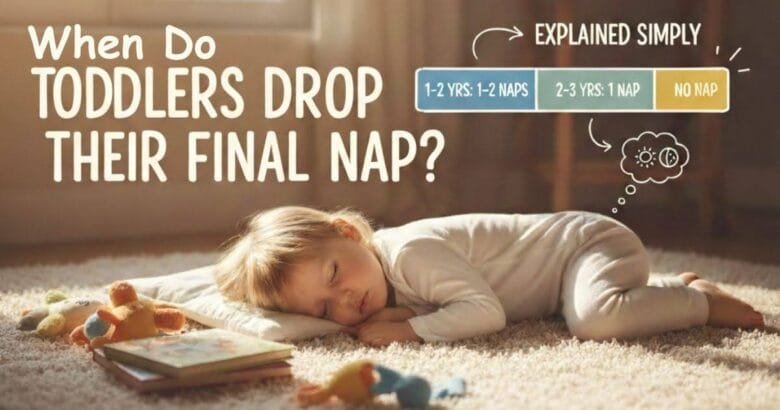
Most toddlers drop their final nap between 3 and 5 years old, though the exact timing varies by child. As toddlers grow, they can stay awake longer without becoming overtired, and nighttime sleep becomes more consolidated. Signs like nap resistance, late bedtimes, or skipped naps without meltdowns often signal it’s time for this transition. Understanding …

Deciding when babies should sleep in their own room is a major milestone for parents and infants alike. Experts often recommend waiting until a baby is between 4 to 6 months old, when they are more capable of sleeping safely through the night and parents feel comfortable with reduced proximity. Transitioning a baby to their …

Most babies drop to one nap between 12 and 18 months, but the timing isn’t the same for every child. This transition happens as sleep needs change and babies can stay awake longer without becoming overtired. Signs like resisting the second nap, taking longer to fall asleep, or waking early from naps often signal that …
Night terrors in babies can be frightening for parents to witness, but they’re usually harmless and temporary. During a night terror, a baby may cry, scream, or appear awake while still being asleep, often without recognizing caregivers. These episodes are linked to an immature nervous system, overtiredness, or disrupted sleep cycles, not bad dreams. Understanding …

You tiptoe out of the nursery, holding your breath. You’ve just put the baby down, and you finally have a moment to yourself. You sit down, take a sip of your now lukewarm coffee, and then you hear it, the cry. You check the clock. It’s been exactly 30 minutes. If this sounds painfully familiar, …

If you’ve ever rocked, soothed, or bounced your baby for what feels like hours, only for them to resist sleep, you’re not alone. Many parents ask, Why Do Babies Fight Sleep?, especially when they seem tired but refuse to settle. From overtiredness and overstimulation to developmental milestones and sleep associations, there are several reasons why …
Is your little burrito fighting back? You’ve wrapped them snugly, dimmed the lights, and turned on the white noise, but instead of drifting off to dreamland, your baby is kicking, grunting, and acting like they’re in a wrestling match. If this sounds familiar, you might be dealing with swaddle resistance. While swaddling is a lifesaver …
Introduction to Sleep Regression Sleep regression is a common phenomenon that affects many infants and toddlers, typically manifesting as temporary disruptions in their sleep patterns. These regressions can occur at various developmental stages, with many parents noticing significant changes around 6 months, 9 months, 12 months, 15 months, 18 months, and even 24 months. Understanding …
As a parent, you want to choose the safest and healthiest options for your baby, but when it comes to toys, you might wonder, Are Plastic Toys Bad for Babies? With concerns about chemicals like BPA, phthalates, and microplastics, many parents question whether plastic toys pose health risks. While some plastic toys are made with …

Introduction to Preschool Skills The preschool years represent a foundational period in a child’s development, where critical skills are cultivated that will serve as a base for future learning and social interaction. During this stage, children typically aged three to five, exhibit burgeoning capacities in cognitive, emotional, social, and physical domains. Each of these areas …