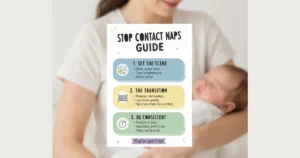
Picture this: You’ve just spent forty minutes rocking, shushing, and swaying your little one. Their eyelids are heavy, their breathing is slow, and they look completely peaceful. You gently, very, very gently, lower them toward the crib… and their eyes pop open like they just drank a double shot of espresso.
Sound familiar? If you’ve resorted to letting your baby sleep on your chest just to catch a break, welcome to the wonderful world of contact napping.
The Science Behind Contact Napping
Let’s get a little nerdy for a second, but don’t worry, we’ll keep it fun. Contact napping isn’t just about enjoying those sweet baby smells; there is actually some serious biology happening while you sit on the couch.
How Does Contact Napping Affect Infant Development?
Think of your body as a giant, living thermostat for your baby. When they sleep on you, your body temperature naturally adjusts to keep them warm, and the rhythm of your heartbeat helps regulate their own heart rate and breathing.
This creates a sense of total safety. When your baby feels safe, their body doesn’t have to waste energy stress crying or fussing. Instead, they can pour all that energy into growing their brain and body. By acting as their “external regulator,” you are basically giving them a developmental superpower while they snooze.
The Role of Oxytocin in Bonding and Sleep
You have probably heard of oxytocin, people often call it the “love hormone.” When you hold your sleeping baby skin to skin or just close by, both of your bodies release this magical chemical.
It makes you feel all warm and fuzzy, but it does important work, too. For your baby, oxytocin acts like a natural chill pill, helping them drift into a deeper, more restorative sleep. It also lowers stress for you (goodbye, frazzled nerves!). So, while you might feel “trapped” under a sleeping infant, you are actually building a powerful chemical bridge of trust and calm.
Benefits of Contact Napping
If you’ve ever felt guilty about “doing nothing” while your baby naps on you, let’s flip the script. You aren’t just a human pillow; you are actively engaging in one of the best things you can do for your little one.
Emotional Bonding and Attachment
Think of contact napping as a silent conversation between you and your baby. When you hold them close, you are reinforcing the idea that you are their safe harbor. This consistent physical closeness builds a secure attachment style, which is basically psychologist speak for “my parents have my back.” It’s the foundation for their future confidence and independence.
Improved Sleep Quality for Babies
Ever notice how your baby wakes up the second their back hits the crib mattress? That’s because they crave the warmth and motion of a living being. When they sleep on you, they often connect sleep cycles better, meaning longer, deeper naps. Instead of a grumpy 20 minute catnap, you might actually get a solid hour of peace (and maybe even finish a chapter of your book).
Reduced Crying and Stress Levels
Nobody likes the sound of a distressed baby. Contact napping can significantly dial down the drama. Physical touch lowers cortisol (the stress hormone) for both of you. A calmer baby means less crying and fussing when they wake up, and honestly, a calmer parent too. It turns nap time from a battle of wills into a peaceful recharge for everyone involved.
Drawbacks and Challenges of Contact Napping
We won’t sugarcoat it: as wonderful as those snuggles are, contact napping isn’t always a walk in the park. Sometimes, it feels more like being stuck under a very cute, very warm boulder. It’s important to talk about the tricky parts so you can decide what works best for your family.
Does Contact Napping Create Dependency?
This is the number one question that keeps parents up at night (ironically). You might worry that if you let your baby sleep on you now, they’ll never sleep alone. Here is the truth: babies are wired to need closeness. It’s a biological need, not a bad habit.
Responding to that need now actually builds independence later. Think of it like filling up a “comfort tank.” Once their tank is full, they feel safe enough to explore sleeping on their own when they are developmentally ready. You aren’t creating a problem; you are meeting a need.
The “Nap Trap”: Managing Time and Productivity
Let’s be real, getting trapped under a sleeping baby creates a logistical nightmare. You have laundry to fold, emails to answer, and you really need to pee. This is the infamous “nap trap.”
The challenge is balancing your to do list with your baby’s need for contact. It forces you to slow down, which can feel frustrating when you’re used to being productive. The key is preparation. Grab your water, your phone, and the remote before you sit down. Sometimes, the only thing you can “produce” during a nap is a well rested baby, and that’s okay too.
How to Make Contact Napping Work for You
So, you’ve decided to embrace the snuggle life. Awesome! But how do you do it without hurting your back or feeling like you’re stuck in quicksand? It’s all about finding a rhythm that works for both you and your little one.
Tips for Safe and Comfortable Contact Napping
First rule of contact club: get comfortable before the baby falls asleep. Once they are out, you are not moving. Set up a “nap station” with water, snacks, your phone, and a charger within arm’s reach. Support your back with pillows, and make sure your arms are propped up so they don’t go numb holding that precious weight.
Safety is huge here. The golden rule is that you must stay awake. If you feel drowsy, put the baby down in a safe space like a crib or bassinet immediately. Contact napping is only safe when the parent is alert enough to monitor the baby’s breathing and position.
How to Balance Contact Naps with Independent Sleep Training
You don’t have to choose between being a human mattress forever or strictly using a crib. Many parents find a “hybrid” approach works best. Try practicing one crib nap a day, usually the first morning nap when sleep pressure is highest, and save the contact naps for later in the day when babies tend to be fussier. This helps them get used to their own space without losing that special bonding time. It’s the best of both worlds!
FAQs
Can Contact Napping Spoil My Baby?
In a word: no. It is impossible to “spoil” a baby by meeting their core needs for comfort, safety, and connection. When your baby cries for you, they are communicating a need, not trying to manipulate you. Responding with a warm hug and a cozy nap teaches them that they are loved and that their world is a safe place. You are not creating a bad habit; you are building a strong foundation of trust that will help them feel secure enough to be independent later on.
When Should I Stop Contact Napping?
There is no magic date on the calendar for when you “should” stop. The right time to stop is whenever contact napping stops working for you or your family. For some, that might be when they return to work. For others, it might be when their baby starts getting too heavy or wiggly. The decision is entirely personal. If you love the snuggles and it fits your lifestyle, keep going! If you feel touched out and need a change, that’s your signal to start transitioning. Trust your gut, it knows best.
Unique Perspectives on Contact Napping
Sometimes it feels like modern parenting involves a lot of strict rules, but looking outside our usual bubble can change everything. Let’s see how contact napping looks from different angles, you might be surprised!
Cultural Practices Around Contact Napping
If you’re stressed about your baby sleeping on you, take a deep breath: you are doing exactly what parents have done for thousands of years. In many cultures around the world, from Indigenous communities in the Americas to families in Asia and Africa, keeping a baby close isn’t just “okay,” it is the standard.
Western parenting often pushes independent sleep early on, but globally, this is the exception, not the rule. Many societies view physical closeness as essential for raising a calm, community minded child. So, when you hold your sleeping baby, you aren’t failing at sleep training; you are participating in a global, timeless tradition of care.
The Role of Contact Napping in Work from Home Productivity
Okay, hear us out: contact napping might actually help you get work done. It sounds backward, right? But ask any parent who works from home.
When your baby naps in a crib, you might spend half that time staring at the monitor, worrying they will wake up. But with a baby snoozing in a wrap or carrier, you know exactly where they are. Your hands are free to type, answer emails, or finally eat that sandwich. Plus, many parents find the “oxytocin boost” from snuggles actually sparks creativity!
Beyond the Baby Stage: Long Term Effects of Contact Napping
It’s easy to get so focused on surviving the newborn phase that you forget about what comes next. You might wonder if all these contact naps will have a lasting impact. Let’s look at what the future might hold for your little snuggle bug.
Does Contact Napping Impact Future Sleep Habits?
Here’s some good news: you are not setting your child up for a lifetime of needing to be held to sleep. While some babies may take a bit longer to embrace independent sleep, most kids learn to sleep on their own just fine.
Think of it this way: you taught your baby how to feel safe and secure during sleep. Once they have mastered that feeling, they can take it with them into their own bed. Kids are adaptable. The cuddles you provide now are a temporary support system, not a permanent requirement for sleep.
How Contact Napping Shapes Emotional Resilience in Children
This is where the real long term magic happens. All that time spent responding to your baby’s needs for closeness builds a powerful sense of security. This early attachment forms the bedrock of their emotional health.
Children who feel deeply secure in their parents’ love are often more confident and better equipped to handle stress later in life. They learn that it’s okay to need help and that comfort is always available. By providing that comfort now, you are giving them the tools to become more resilient, self assured kids and adults. It’s a gift that lasts long after they’ve outgrown your lap.
Conclusion
We have covered a lot of ground, from the sweet science of oxytocin to the very real struggle of needing to pee while pinned to the couch. As we wrap up, let’s take a deep breath and look at the big picture.