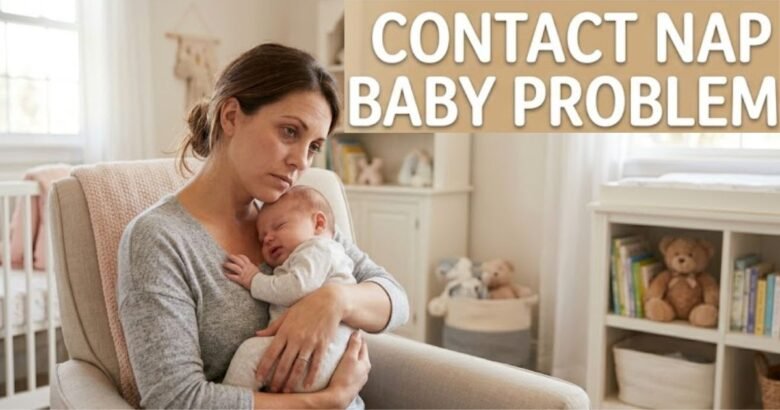
If your baby will only sleep while being held, you’re not alone this is a common contact nap baby problem many parents face. While contact naps can feel comforting and natural for your baby, they can also make it difficult for parents to get rest or manage daily tasks. This guide quickly explains the main causes behind contact naps and offers simple, practical fixes to help your baby transition to more independent sleep without stress.
What Are They and Why Are They So Common?
Your baby just spent 9 cozy months inside your belly. The outside world is bright, loud, and very different. When they rest against your skin, they hear your heartbeat. They feel your warmth and smell your familiar scent. This makes them feel entirely safe and secure.
The Science Behind Why Babies Thrive on Closeness
Studies show that being close to you lowers a baby’s stress levels. When they feel calm, their tiny bodies can easily drift off to sleep. Your steady breathing actually helps them regulate their own breathing patterns. Biology naturally pushes your infant to seek out your arms for comfort and survival.
The Pros and Cons of Sleeping on You

Like most parenting choices, holding your infant for sleep comes with both wonderful highs and frustrating lows. Let’s look at the two sides of the coin.
Benefits for You and Baby
Snuggle sleep offers some amazing perks for both of you. First, holding your baby releases a feel-good chemical called oxytocin in both of your brains. This helps you bond and feel happy. Second, resting on your chest helps keep your baby’s body temperature stable. Third, being physically close means you spot their early hunger signs right away. You can feed them before they even start to cry.
The Drawbacks: Being Trapped and Tired
On the flip side, holding a sleeping infant for 2 hours is incredibly hard work. Your arm goes numb, and your coffee gets cold. You might stress about the messy dishes piling up in the sink. Plus, there is a major safety risk if you accidentally fall asleep yourself. If your little one gets too used to being held, moving them to a crib later can feel like a giant hurdle.
Safety First: Guidelines for Snuggle Sleep
Keeping your precious baby safe is your biggest job. If you decide to hold your infant while they sleep, there are a few strict rules you need to follow.
The Do’s and Don’ts of Safe Sleeping
If you choose to enjoy contact naps, you must stay awake. That is the number one rule. Never let your baby sleep on you if you are exhausted and might drift off. Do not sleep together on a soft couch or a squishy armchair. If you feel your eyes getting heavy, gently place your baby in their crib or bassinet right away.
Babywearing Safety Tips
Using a wrap or carrier is a wonderful way to hold your baby while keeping your hands free to eat or fold laundry. Always make sure your baby’s face is totally visible. Their chin should be up, pointing away from their chest, so they can breathe easily. Check on them often to make sure they are safe, secure, and getting plenty of fresh air.
When Do Babies Naturally Outgrow This Phase?
You might wonder if you will be holding your baby for sleep forever. Do not worry! All babies eventually want their own space.
Signs Your Baby Is Ready for Independent Sleep
Around 4 to 6 months of age, your baby starts to learn new sleep skills. You might notice them squirming when you try to hold them. They might wake up the second you sit down in your rocking chair. These are giant clues that they are ready to stretch out in their own bed.
How to Gradually Reduce Holding Them
You do not have to stop cold turkey. Try picking 1 nap a day to practice crib sleep. Usually, the very first morning nap is the easiest because your baby is still quite tired. Once they master that single sleep session, you can add another one the next week. Take it slow and celebrate the tiny wins.
Practical Tips for Transitioning to Independent Sleep
Moving your baby from your arms to a crib takes a little bit of planning. Set them up for success by creating a wonderful sleep space.
Creating a Sleep-Friendly Environment
Your baby needs a peaceful room to rest well. Use dark curtains to block out the bright sun. Keep the room nice and cool. Turn on a white noise machine to block out loud dogs or ringing doorbells. This mimics the loud whooshing sounds they heard in the womb and blocks out household chatter.
Establishing a Consistent Pre-Nap Routine
Babies absolutely love patterns. Do the exact same 3 things before every single nap. You might change their diaper, read a short board book, and sing a quiet song. Doing this every day signals to their growing brain that it is time to snooze.
Handling Setbacks: Sleep Regressions and Growth Spurts
Sometimes, your baby will suddenly fight their crib. This usually happens during a growth spurt or when they learn a new trick, like rolling over. Take a deep breath. It is perfectly fine to offer extra cuddles during these tricky weeks. Just go back to practicing the crib routine once they feel better.
The Emotional Side of Letting Go
Teaching your baby to sleep alone is a big milestone. It is totally normal to feel a mix of sadness and relief.
Balancing Responsibilities and Mental Health
It is completely normal to feel torn. You love the sweet cuddles, but you also desperately need a shower. Please remember that taking care of yourself makes you a much better parent. Do not feel guilty for wanting 30 minutes of free time to eat a hot meal. Your mental health matters just as much as your baby’s rest.
How to Extend Short Naps Without Holding
When you first move your baby to the crib, they might only sleep for 20 minutes at a time. If they wake up early, pause for a moment outside their door. Give them 2 minutes to see if they settle back down on their own. If they start crying, go in and pat their back gently instead of picking them up right away.
Conclusion
Contact naps are a natural way for babies to feel secure, but they can be challenging for parents seeking rest. By understanding why your baby prefers being held and gradually introducing independent sleep techniques like a consistent routine, gentle soothing, and safe sleep setups you can help your little one nap comfortably on their own. Patience and consistency are key to easing this transition while keeping your baby happy and secure.
FAQs
Do contact naps cause bad sleep habits?
Not at all. Holding your newborn helps them feel loved and secure. You cannot spoil a brand new baby. As they grow older, they might prefer your arms simply because it feels familiar. You can gently teach them new habits whenever you feel ready to make a change.
Will My Baby Ever Learn to Sleep Without Me?
Yes, they absolutely will! No teenager still needs their mom to hold them for a nap. All babies eventually figure out how to sleep independently. It just takes a little bit of time, clear practice, and patience from you.
Are contact naps safe for my baby?
Yes, contact naps are safe when done properly. Always ensure your baby’s airway is clear, avoid soft surfaces, and never sleep on a couch or adult bed while holding them. Supervised naps on your chest or in safe co-sleeping setups are fine for short periods.