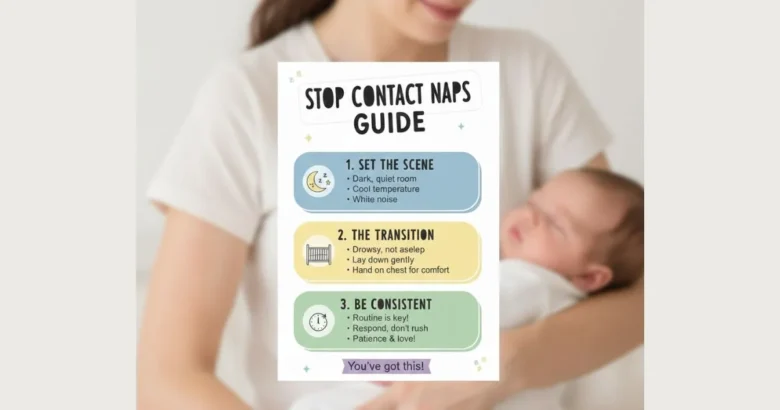
You can stop contact naps without stress or tears! While it’s natural for babies and toddlers to crave snuggles, holding them for every nap can make sleep harder for both of you. The key is using gentle, consistent strategies that teach your child to nap independently, feel safe in their crib, and still get the …

Yes, you can nap with contact, but only if it’s done safely. Many parents fall asleep during contact naps because they’re exhausted, not careless. While contact napping can calm babies and support bonding, it also comes with real risks if done on unsafe surfaces or positions. The key is knowing when it’s unsafe, how to …

Contact naps aren’t just cozy moments; they’re packed with real benefits for both babies and parents. When your baby sleeps on your chest or in your arms, it helps them feel safe, calm, and deeply connected to you. From better sleep and reduced crying to strong emotional bonding and healthy brain development, the benefits of …

Is your baby refusing the crib and only happy snoozing on you? You’re not alone. Many parents face the “contact nap” phase, where their little one only sleeps while cuddled. It can be exhausting, frustrating, and sometimes even feel impossible. But understanding why your baby prefers contact naps, how it affects their sleep, and what …
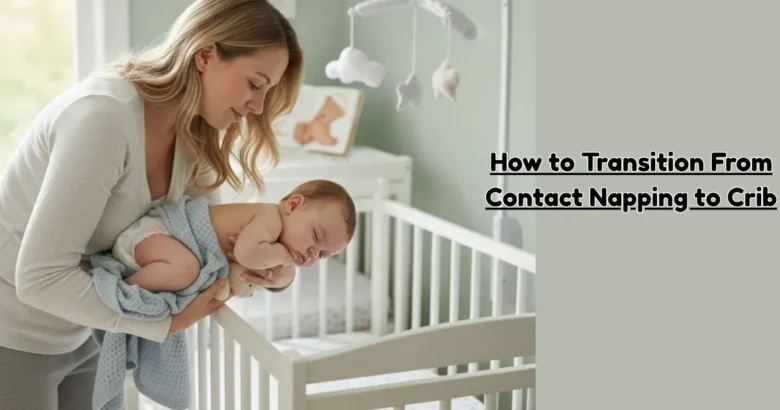
To transition from contact napping to the crib, start slow and keep it gentle. First, create a simple nap routine (feed, cuddle, sleep) so your baby knows what to expect. Once your baby is calm and drowsy but not fully asleep, place them in the crib. This helps them learn to fall asleep independently. Begin …

Are contact naps bad? Not really! Many parents wonder if holding their baby to nap will spoil them, but contact naps can actually boost comfort and bonding. The main downside is that too many may make independent naps harder later. By understanding the pros and cons, you can make contact naps work safely and happily …

Contact naps are when a newborn sleeps while held close to a parent or caregiver, usually on the chest or in the arms. These short, cozy naps help babies feel safe, boost bonding, and make it easier for them to fall asleep peacefully. For many parents, contact naps are a gentle way to soothe and …
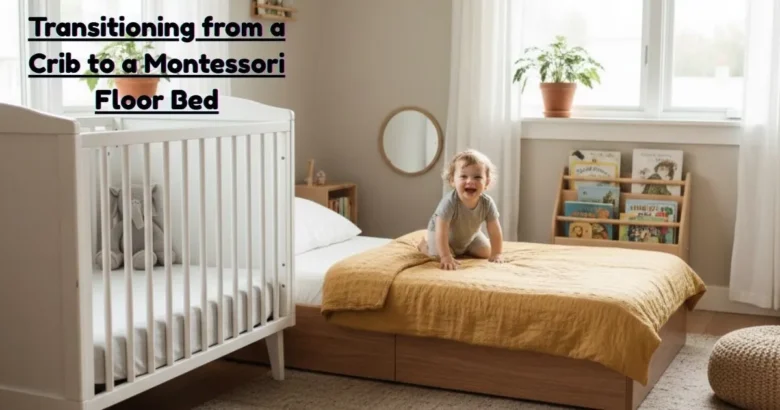
Transitioning from a crib to a Montessori floor bed is a simple process that encourages your child’s independence while keeping them safe. Start by placing a low mattress on the floor in a child-friendly, hazard-free space and include familiar items like their favorite blanket or stuffed toy to make it feel comforting. Explain to your …

Compassionate parenting focuses on understanding a child’s emotions, needs, and challenges with empathy rather than punishment. This approach helps children feel safe, valued, and respected in their home environment. By combining love with clear boundaries, parents can nurture strong minds and caring hearts. Compassionate parenting creates a foundation for lifelong emotional strength and healthy relationships. …

Feeling hurt, confused, or rejected by your own mother can be deeply painful. When you keep asking yourself, “Why does my mother treat me this way?” it often means something inside the relationship feels broken or unfair. The truth is, a mother’s behavior is not always a reflection of your worth. This article explores the …