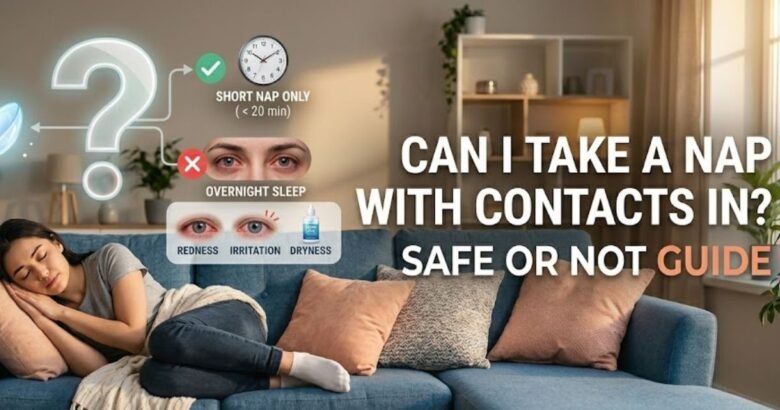
Wearing contact lenses while taking a nap might seem harmless, but it can affect your eye health more than you think. In most cases, sleeping or napping with contacts in reduces oxygen flow to the cornea, increasing the risk of dryness, irritation, and even serious infections. Some lenses are designed for extended wear, but even then, eye specialists usually recommend removing them before sleep whenever possible.
What Actually Happens to Your Eyes When You Nap in Contacts
Napping with contact lenses in might feel harmless, but your eyes go through several changes even during a short sleep. Contact lenses reduce oxygen flow to the cornea, and when your eyes are closed during a nap, this effect becomes even stronger. Over time, this can lead to discomfort, dryness, and a higher risk of eye problems.
Reduced Oxygen Supply to the Cornea
When you wear contacts, your cornea already receives less oxygen than normal. During a nap, blinking stops and oxygen circulation drops further, which can make your eyes feel tight, red, or irritated when you wake up.
Increased Risk of Dryness and Infection
Contacts can trap bacteria and reduce natural tear flow while you sleep, even briefly. This creates a perfect environment for irritation and infections like keratitis, especially if napping with lenses becomes a regular habit.
Does Nap Length Matter? The Nuance Most Articles Skip

Nap length really does matter, but not in the overly simplified way most content suggests. It’s not just about choosing between a “short” or “long” nap what actually matters is how your nap interacts with your sleep stages and internal body clock. A well-timed nap can boost energy, sharpen focus, and improve mood, while a poorly timed or overly long nap can leave you feeling groggy and disrupt your nighttime sleep. The real nuance is understanding that the quality and timing of your nap are just as important as its duration.
The 20-Minute Sweet Spot vs. Longer Naps
Short naps, typically around 15 25 minutes, are ideal for a quick energy boost because they keep you in lighter stages of sleep, making it easier to wake up refreshed and alert. On the other hand, longer naps lasting 60–90 minutes allow your body to complete a full sleep cycle, which can enhance memory, creativity, and overall mental performance. However, if you wake up in the middle of deep sleep during a longer nap, you may experience sleep inertia, leaving you feeling sluggish and disoriented instead of energized.
The Hidden Factor: Timing and Your Sleep Cycle
While nap length is important, timing is the factor most people overlook. The best time to nap is during the early afternoon, usually between 1 PM and 3 PM, when your body naturally experiences a dip in alertness. Napping during this period works with your circadian rhythm, making the nap more effective. In contrast, taking a nap too late in the day can interfere with your ability to fall asleep at night, ultimately doing more harm than good to your overall sleep quality.
Woke Up With Contacts In? Do This First In Order
To safely remove contacts after sleeping in them, follow these steps:
- Keep your eyes closed for 30 seconds let natural moisture accumulate.
- Apply 2–3 drops of sterile rewetting drops or lubricating eye drops (not tap water ever).
- Blink slowly 5–6 times to distribute moisture under the lens.
- Wait 60–90 seconds before attempting removal.
- If the lens still feels stuck, add more drops and wait don’t force it.
- Remove gently and discard if daily disposables; disinfect thoroughly if reusable.
- Rest without contacts for the remainder of the day if possible.
Are Any Contacts Actually Safe to Nap In?
Quick Comparison: Contact Lens Types for Napping
| Option | Best For | Key Benefit | Limitation |
| Acuvue Oasys (silicone hydrogel) | Occasional extended wear | FDA-approved for up to 6 nights continuous wear | Still increases infection risk vs. removing |
| Air Optix Night & Day | Frequent nappers or shift workers | Approved for up to 30 nights continuous wear | Requires eye doctor prescription and monitoring |
| Biotrue ONEday (daily disposable) | Standard daily wearers | Discard and use fresh pair — no cleaning needed | Not designed for any sleep; discard after accidental nap |
| Standard soft daily wear lens | Daytime only | Most affordable and accessible | Not safe for any sleep duration |
Acuvue Oasys vs. Air Optix Night & Day: Oasys is better suited for someone who occasionally needs flexibility (a long flight, a shift nap) because it’s more widely available and requires less intensive monitoring. Air Optix Night & Day works better when extended wear is a genuine lifestyle need prescribed by an optometrist. The key difference is oxygen transmissibility — Night & Day has one of the highest Dk/t ratings available.
The Counter-Intuitive Part (Most People Get This Wrong)
Most people assume that a short nap with contact lenses is harmless, but the reality is a bit more complicated. Even a brief sleep can start changing how your eyes respond to lenses, and the effects are not always immediately noticeable. That’s why eye specialists often warn that “just a quick nap” can still carry risks.
Short Sleep Still Reduces Eye Oxygen Levels
Even during a 20–30 minute nap, your eyes are closed and oxygen exchange drops significantly. Contact lenses already limit oxygen flow, so combining both can create enough stress on the cornea to cause irritation once you wake up.
Damage Isn’t Always Immediate
One of the most misunderstood parts is that problems don’t always show up right away. You might feel fine after a nap, but repeated exposure can slowly increase the risk of dryness, inflammation, or infections over time—making it a habit that feels safe but isn’t.
Conclusion
Napping with contact lenses may seem convenient, but it’s generally not recommended unless you are using lenses specifically designed for extended wear. Even short naps can reduce oxygen supply to your eyes, leading to dryness, irritation, and a higher risk of infection over time. For the safest eye health, it’s always better to remove your contacts before sleeping, even for a quick rest.
FAQs
Is it okay to take a 20-minute nap with my contacts in?
It’s not recommended. Even 20 minutes reduces corneal oxygen supply and creates conditions for bacterial growth. Risk is lower than a full-night sleep but not zero especially if done regularly.
What should I do if I accidentally fell asleep with my contacts in?
Don’t remove them immediately. Apply lubricating eye drops first, wait 60–90 seconds, blink gently, then remove. Watch for redness, discharge, or vision changes for 24 hours.
Should I throw away my contacts if I napped in them?
Yes, if they’re daily disposables always discard and use a fresh pair. If they’re reusable, disinfect thoroughly with fresh solution before wearing again.
Why does napping in contacts feel worse than sleeping in them overnight?
It often doesn’t it just feels more sudden. After a nap your eyes expect to feel rested. The dryness and tacky lenses are jarring precisely because the nap was short and your eyes didn’t have time to adjust.
When should I see a doctor after sleeping in my contacts?
If redness, pain, light sensitivity, or discharge persists more than a few hours after removal or if vision doesn’t return to normal see an eye doctor the same day. Don’t wait.