
Bringing a newborn home comes with many decisions, and choosing where your baby should sleep is one of the most important ones. Many new parents wonder whether a bassinet is truly necessary or just another baby product. Bassinets are designed specifically for newborns and offer convenience, safety, and closeness during the early weeks. However, they also come with limitations that may not suit every family or lifestyle. Understanding the pros and cons of using a bassinet can help you make a confident choice. Factors like space, budget, and sleeping habits all play a role. Expert recommendations often highlight safety and ease of nighttime care. This guide will walk you through everything you need to know. By the end, you’ll know if a bassinet is the right fit for your newborn and your home.
What Is a Bassinet and How Does It Work?
Before we decide if you need one, let’s talk about what a bassinet actually is. Think of a bassinet as a cozy little nest designed just for tiny babies. It is a portable sleep space specifically made for newborns and younger infants.
Unlike a big, heavy crib, a bassinet is usually smaller, lighter, and easier to move around. It is meant for babies from the day they are born until they are about four or five months old.
Most bassinets have a few key features:
- Mesh sides: This helps with airflow so your baby can breathe easily, even if they wiggle close to the edge. It also lets you see them without getting out of bed.
- A firm mattress: This is super important for safety. Soft beds are comfy for adults, but babies need a firm surface to stay safe.
- A smaller footprint: This means it doesn’t take up much room. You can slide it right next to your bed.
A bassinet works by giving your baby a safe, dedicated spot to sleep that is close to you. It creates a separate sleeping area, which follows safe sleep guidelines, but keeps your little one within arm’s reach.
Why Do Parents Choose a Bassinet?
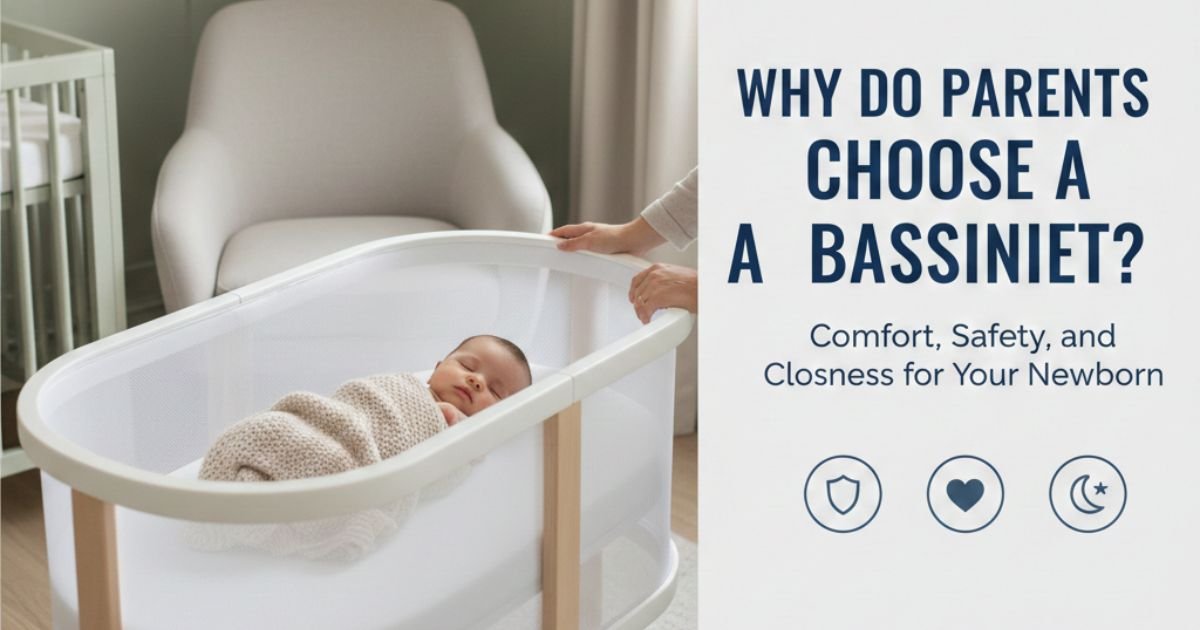
So, why do so many parents swear by these little beds? It usually comes down to three things: convenience, comfort, and peace of mind.
The Magic of Night Feedings
Remember that 3:00 AM scenario we talked about? When your baby is sleeping in a bassinet right next to your bed, night feedings are so much easier. You don’t have to get out from under your warm covers and walk to another room. You simply sit up, reach over, and you are there. If you are recovering from a C-section, this is a huge deal. Getting in and out of bed can be painful in those first few weeks, so having your baby close by is a game-changer.
Keeping Baby Close
Newborns are used to being snug and close to their moms. The transition to the big, wide world can be scary for them. A bassinet feels cozier than a giant crib. Plus, many parents just feel better being able to hear their baby breathing right next to them. It helps with that new-parent anxiety we all get!
Nap Time Anywhere
Because bassinets are often lighter than cribs, many are portable sleep spaces. You can move a portable bassinet from the bedroom to the living room or even into the kitchen while you make a sandwich. This means your baby can nap safely wherever you are, and you can keep an eye on them while you get things done.
What Are the Pros and Cons of Using a Bassinet?
Like everything in life, bassinets have good points and not-so-good points. Let’s weigh the bassinet pros and cons so you can see the full picture.
The Pros (The Good Stuff)
- Easy Access: We mentioned this, but it is worth repeating. Being able to reach your baby instantly is amazing for late-night soothing.
- Great for Small Spaces: If you live in an apartment or have a small bedroom, a full-sized crib might not fit next to your bed. A compact bassinet fits into tight corners easily.
- Portability: Many models have wheels or fold up. This makes them great travel-friendly bassinets if you plan to visit Grandma or go on a trip.
- Soothing Features: Some fancy bassinets come with extras like vibration, white noise, or gentle rocking motions to help your baby drift off to sleep.
The Cons (The Not-So-Good Stuff)
- Short Lifespan: This is the biggest bummer. Your baby will grow fast! Most babies grow out of a bassinet by 4 to 6 months old. Once they start rolling over or pushing up on their hands and knees, it isn’t safe anymore.
- Extra Cost: If you buy a bassinet, you will still need to buy a crib later. So, it is an extra expense on top of other baby gear.
- Storage: Once your baby is too big for it, you have to find a place to store it if you plan to save it for a future sibling.
Do You Really Need a Bassinet?
Now we arrive at the million-dollar question: “Do I need a bassinet?”
The honest answer? No, you do not strictly need one.
You can absolutely skip the bassinet and have your baby sleep in a crib from day one. A crib is perfectly safe for a newborn as long as it meets safety standards.
However, you might want a bassinet if:
- Your Bedroom is Small: If a crib simply won’t fit in your room, a bassinet is the best way to room-share without tripping over furniture.
- You Want Convenience: If the idea of walking to another room multiple times a night sounds terrible to you, a bassinet is worth every penny.
- You Want Mobility: If you want a safe place for the baby to nap in different rooms of your house during the day.
On the other hand, you might skip it if:
- You Are on a Tight Budget: Infant sleep solutions can be expensive. Saving that money for a high-quality crib might be smarter for your wallet.
- You Have a Large Bedroom: If you have space for a crib in your room, you can just set that up comfortably.
- You Are a Minimalist: If you hate having too much “stuff” or baby gear cluttering up your house, sticking to just one bed (the crib) is a great choice.
How to Choose the Right Bassinet for Your Baby
If you have decided that “Yes, I want one!”, how do you pick the right one? There are so many choices! Here is a simple checklist to help you shop.
Safety First
This is non-negotiable. Look for a sticker that says JPMA Certified or mentions complying with CPSC (Consumer Product Safety Commission) standards. This means the bassinet has been tested to make sure it won’t tip over and is safe for your baby.
Check the Weight Limit
Every bassinet has a weight limit. Some are 15 pounds, while others go up to 20 or 25 pounds. Check the box to see how long your baby can use it. Higher limits mean you might get a few more weeks of use out of it.
Look at the Mattress
The mattress should be thin and firm. It might feel hard to you, but soft mattresses are dangerous for babies because they can block their breathing. Make sure there are no gaps between the mattress and the side of the bassinet.
Breathability
Look for mesh sides. Mesh allows air to flow through the bassinet, keeping your baby cool and safe. It also lets you peek at them without standing up.
Extra Features
Do you want storage pockets for diapers? Do you want it to rock? Do you need wheels? Think about what features will make your life easier. For example, a bassinet with storage is great for keeping pacifiers and wipes handy in the middle of the night.
Bassinet Safety Guidelines Every Parent Should Know
We know you want to keep your little one safe. Following safe sleep guidelines is the best way to do that. Here are the simple rules to remember.
Back is Best
Always place your baby on their back to sleep. This applies to naps and nighttime sleep. It is the number one way to reduce the risk of SIDS (Sudden Infant Death Syndrome).
Keep the Bed Bare
We know those fluffy blankets and stuffed animals are cute, but they do not belong in a bassinet. The only thing that should be in the bassinet is the mattress, a fitted sheet, and your baby. No pillows, no bumpers, and no toys.
Room-Sharing, Not Bed-Sharing
The American Academy of Pediatrics (AAP) recommends room-sharing. This means your baby sleeps in your room, but on their own separate surface (like a bassinet or crib). This keeps them close but safe from accidental suffocation that can happen in an adult bed.
Know When to Stop
This is crucial. You must stop using the bassinet when your baby reaches the weight limit OR when they start to push up on their hands and knees or roll over. Whichever happens first! Once they can move like that, they could tip the bassinet over, so it is time to move to a crib.
Alternatives to a Bassinet
Maybe you are still asking, “Do I need a bassinet?” and thinking the answer is “no.” That is totally fine! There are great alternatives that can save you money or space.
The Mini Crib
A mini crib is exactly what it sounds like—a smaller version of a regular crib. It is bigger than a bassinet but smaller than a standard crib.
- Why it’s great: It lasts longer! Many babies can sleep in a mini crib until they are one or two years old. It often has wheels, too.
The Playard (Pack ‘n Play)
A playard is a mesh-sided playpen that often comes with a bassinet attachment on top.
- Why it’s great: It is the ultimate multi-tasker. You use the bassinet part when they are tiny. Then, when they get bigger, you take the top off and use the bottom for sleep or play. It folds up into a bag, making it perfect for travel.
A Standard Crib
You can just put a regular crib in your bedroom if it fits.
- Why it’s great: You only buy one bed. You don’t have to worry about transitioning them to a new bed after just a few months.
What Are the Best Bassinets for Different Needs?
Not all families are the same. Here are some quick recommendations depending on your lifestyle.
For Small Spaces
If you live in a tiny apartment, look for a compact bassinet. These have a simple, slim design without wide legs that trip you up in the dark.
For Travel
If you visit family often, you need travel-friendly bassinets. These are lightweight and fold flat in seconds. They usually come with a carrying bag.
For Budget-Conscious Parents
You don’t have to spend a fortune. There are many affordable bassinets that are safe and simple. You skip the electronic rocking and vibrating features, but you still get a safe place for baby to sleep.
For C-Section Moms
Look for a bassinet vs. bedside sleeper. A bedside sleeper has a side wall that lowers down, so you can slide the baby over to you without lifting them up high. This is much gentler on your tummy while you heal.
Conclusion
A bassinet can be a helpful and comforting option for newborn sleep, especially during the first few months. It allows parents to keep their baby close, making nighttime feedings and soothing easier. However, it is not a strict necessity for every family. Some parents prefer starting directly with a crib to save money and space. The best choice depends on your living situation, budget, and personal comfort. As long as your baby sleeps on a safe, firm surface that meets safety guidelines, you are making the right decision. What matters most is creating a secure and peaceful sleep environment for your newborn.
FAQs
Do I really need a bassinet for my newborn?
A bassinet is not mandatory, but it can be very convenient for the first few months. It keeps your baby close to your bed, which is helpful for nighttime feeding and diaper changes. Many parents find it reassuring to have their newborn within arm’s reach. However, a crib or playard can also be used safely from day one. The decision depends on your comfort, space, and routine. Safety matters more than the type of sleeping furniture you choose.
How long can a baby sleep in a bassinet?
Most babies use a bassinet from birth until about 3 to 5 months old. Once a baby starts rolling over, pushing up, or reaching the weight limit, it’s time to transition. Bassinets are designed for short-term use only. Always check the manufacturer’s guidelines for weight and age limits. Moving your baby at the right time helps prevent accidents. A smooth transition to a crib ensures continued safe sleep.
Is a bassinet safer than a crib for newborns?
Both bassinets and cribs are safe if they meet current safety standards. Bassinets offer closer proximity, which can reduce the risk of unsafe sleep practices. Cribs, however, provide more space and are suitable for long-term use. The key is placing your baby on a firm mattress with no loose items. Room-sharing without bed-sharing is recommended by experts. Safety depends more on proper use than on the product itself.
What are the main benefits of using a bassinet?
The biggest benefit of a bassinet is convenience during the newborn stage. It makes nighttime care easier since your baby is nearby. Bassinets are usually smaller and fit well in bedrooms with limited space. Many models are lightweight and portable. They also help parents feel more connected and responsive at night. For many families, this added comfort is worth it.
Can I skip the bassinet and use a crib instead?
Yes, many parents safely skip the bassinet and use a crib from day one. This option saves money and avoids the need to transition later. Cribs are designed for newborns as long as the mattress is firm and properly fitted. Some parents prefer this approach for simplicity. It may require more walking at night if the crib is in another room. Ultimately, both options are acceptable when used correctly.