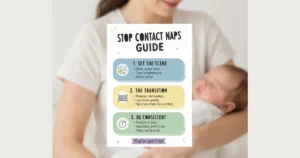
Struggling to get your baby to nap peacefully? Many parents turn to contact naps letting their little one sleep on their chest or in their arms for comfort and connection. These close, cozy moments often feel like the easiest way to soothe a fussy baby.
But are contact naps actually good for your baby’s development and sleep patterns? Understanding the benefits, possible drawbacks, and expert advice can help you make informed choices that support both your baby’s growth and your own well-being.
What Exactly Is a Contact Nap?
A contact nap is when your baby sleeps in physical contact with you on your chest, in a wrap or sling, or cradled in your arms. It’s a biologically normal practice, especially in the first 4–6 months of life.
It replicates the sensory experiences your baby had in the womb:
- Warmth
- Movement
- The sound of your heartbeat
- The smell and feel of your skin
In other words, it feels safe and safe babies sleep better.
The Real Benefits of Contact Naps for Babies
1. Emotional Security
Babies crave closeness, especially in the fourth trimester. Contact naps lower cortisol (stress hormone) and boost oxytocin (the bonding hormone), helping your baby feel emotionally regulated and safe.
2. Improved Sleep Quality
Babies often nap longer and more deeply when held. The rhythmic movement of your body, your breathing, and your scent all soothe the nervous system, leading to more restful sleep.
3. Supports Brain Development
Nurturing physical contact in infancy is linked to stronger cognitive and emotional outcomes later in life. It helps wire the brain for trust, learning, and self-regulation.
4. Better Temperature & Heart Rate Regulation
Your body helps stabilize your baby’s temperature, breathing, and heartbeat—especially important for newborns and preemies, who can’t yet regulate these on their own.
5. Bonding & Attachment
Skin-to-skin and cuddling during naps strengthen the emotional connection between you and your baby. This contributes to secure attachment, which lays the foundation for healthy emotional development.
Read More: Do Contact Naps Help Babies Sleep at Night? Here’s What Research Says
But… Will Contact Naps Create “Bad Habits”?
Short answer: Not in the early months.
In the first 4–6 months, contact naps are developmentally appropriate and often necessary. Newborns rely on your presence to regulate their nervous system, body temperature, and emotions—contact helps them feel safe enough to sleep. At this stage, the goal is rest, not training.
The idea of “bad habits” comes from concerns about sleep associations—when babies link certain conditions (like being held or nursed) to falling asleep. These associations only become problematic later if your baby struggles to fall asleep or stay asleep without them.
Even then, it’s important to remember: no sleep habit is permanent. As your baby grows, you can gently guide them toward more independent sleep through gradual changes. There’s no need to rush contact naps won’t ruin future sleep, and they certainly aren’t something to feel guilty about.
When to Start Shifting Away From Contact Naps
Most babies start showing signs of readiness for more independent sleep around:
- 5 to 6 months of age
- When they can roll over, self-soothe, or resist being held for naps
You don’t have to stop cold turkey. Even transitioning one nap at a time can be enough to build new sleep skills.
Read More: Are Contact Naps Bad for Babies? Myths and Facts Explained
So, Are Contact Naps Good for Babies?
Absolutely especially in early infancy. They’re not only comforting, but they promote brain growth, emotional stability, and better overall sleep. What matters most is balancing closeness with growing independence, at your baby’s pace and yours. You’re not creating bad habits. You’re building trust.
So if contact naps are working for your baby and your arms and schedule allow it enjoy them while they last. They don’t last forever… and that’s exactly why they’re so precious.
Conclusion
Contact naps are beneficial for babies, supporting healthy emotional development, secure attachment, and sleep regulation. Responding to natural infant sleep cues and providing safe, gentle closeness helps foster trust, comfort, and overall wellbeing. By integrating contact naps with consistent sleep routines, parents can nurture a secure environment while supporting the baby’s developmental needs.
FAQs
Are contact naps good for babies?
Yes, contact naps help babies feel secure, regulate sleep patterns, and promote emotional bonding with caregivers.
How do contact naps affect infant sleep?
Contact naps support natural sleep cycles, reduce stress, and may improve overall sleep quality and duration.
Can contact naps impact independent sleep later?
No, contact naps often build trust and security, which can make transitions to independent sleep smoother over time.
What are safe ways to do contact naps?
Hold the baby with proper head support, follow safe sleep guidelines, and avoid lying on soft surfaces while napping together.
How long should babies have contact naps?
Many babies benefit from contact naps in the newborn stage and early infancy, gradually adjusting as they grow and develop sleep routines.