
Feeding to sleep is a common habit, especially in the early months, but over time it can make it harder for babies to settle independently. When a baby relies on feeding as the only way to fall asleep, they may struggle to self-soothe during night wakings and need frequent help to return to sleep.
Stopping feeding to sleep doesn’t mean removing comfort, it means gently teaching your baby new ways to fall asleep. By adjusting feeding times, building a calming bedtime routine, and encouraging drowsy-but-awake sleep, parents can support healthier sleep habits and longer, more restful nights for everyone.
Understanding Night Weaning
Night weaning might sound like a big, complicated term, but it’s really just about helping your baby stop needing feedings during the night. It’s a natural part of growing up, and while it can feel a little overwhelming at first, understanding the basics can make the process much smoother for both you and your little one.
What is Night Weaning?
Let’s break it down. Night weaning means gradually reducing or stopping nighttime feedings so your baby can sleep longer stretches without waking up to eat. It’s not about cutting them off cold turkey or rushing the process. Instead, it’s about gently guiding your baby to get their nutrition during the day and rest peacefully at night.
When Should You Start Night Weaning?
There’s no one-size-fits-all answer here because every baby is different. Some babies are ready to start night weaning as early as 4 to 6 months, while others might need a little more time. A good rule of thumb is to look for signs that your baby is ready, like eating well during the day, gaining weight steadily, and waking up out of habit rather than hunger. If you’re unsure, your pediatrician can help you figure out the right timing.
Why Do Babies Wake Up at Night?
Babies wake up at night for all sorts of reasons. Sometimes they’re hungry, especially in the early months when their tiny tummies can’t hold much. Other times, they wake up because they’re used to the comfort of feeding to fall back asleep. It’s like their version of a cozy blanket or a favorite bedtime story. Understanding why your baby wakes up can help you decide how to approach night weaning.
The Science of Sleep and Hunger
Here’s a fun fact: as babies grow, their sleep cycles start to look more like ours. This means they can go longer stretches without needing to eat. By shifting their calories to the daytime, you’re helping their bodies adjust to a more grown-up sleep pattern. Plus, better sleep means better moods and more energy for all those adorable baby adventures.
Night weaning is a journey, but it’s one that leads to better sleep and happier mornings. Ready to take the next step? Let’s talk about how to prepare for this exciting milestone.
Preparing for Night Weaning
Before you dive into night weaning, it’s important to set the stage for success. Think of it like preparing for a big adventure you wouldn’t head out without a plan, right? With a little preparation, you can make this transition smoother for both you and your baby.
How to Know If Your Baby Is Ready
The first step is figuring out if your baby is ready to start night weaning. Look for signs like eating well during the day, gaining weight steadily, and waking up at night more out of habit than hunger. If your baby is still very young or seems genuinely hungry at night, it might be best to wait a little longer. Trust your instincts, you know your baby better than anyone.
Set Realistic Expectations
Let’s be honest: night weaning isn’t going to happen overnight. It’s a process, and every baby moves at their own pace. Some might adjust quickly, while others take a little more time. Be patient with yourself and your baby. Celebrate small wins, like reducing one feeding or stretching out the time between wake-ups. Progress is progress, no matter how small.
Create a Cozy Sleep Environment
A comfortable sleep space can make a big difference. Keep the room dark and quiet, and consider using a white noise machine to block out any distractions. Make sure your baby’s crib or bed is safe and cozy. The goal is to create a space where your baby feels secure and ready to sleep without needing a feeding.
Build a Support System
You don’t have to do this alone. If you have a partner, involve them in the process. They can help soothe the baby during nighttime wake-ups or take over some of the bedtime routine. If you’re feeling unsure or overwhelmed, don’t hesitate to reach out to your pediatrician or other parents who’ve been through it. Sometimes, just knowing you’re not alone can make all the difference.
Night weaning is a big step, but with a little preparation, you’ll be ready to tackle it head-on. Up next, we’ll explore step-by-step strategies to help you and your baby through this exciting transition. Let’s keep going!
Step-by-Step Night Weaning Strategies
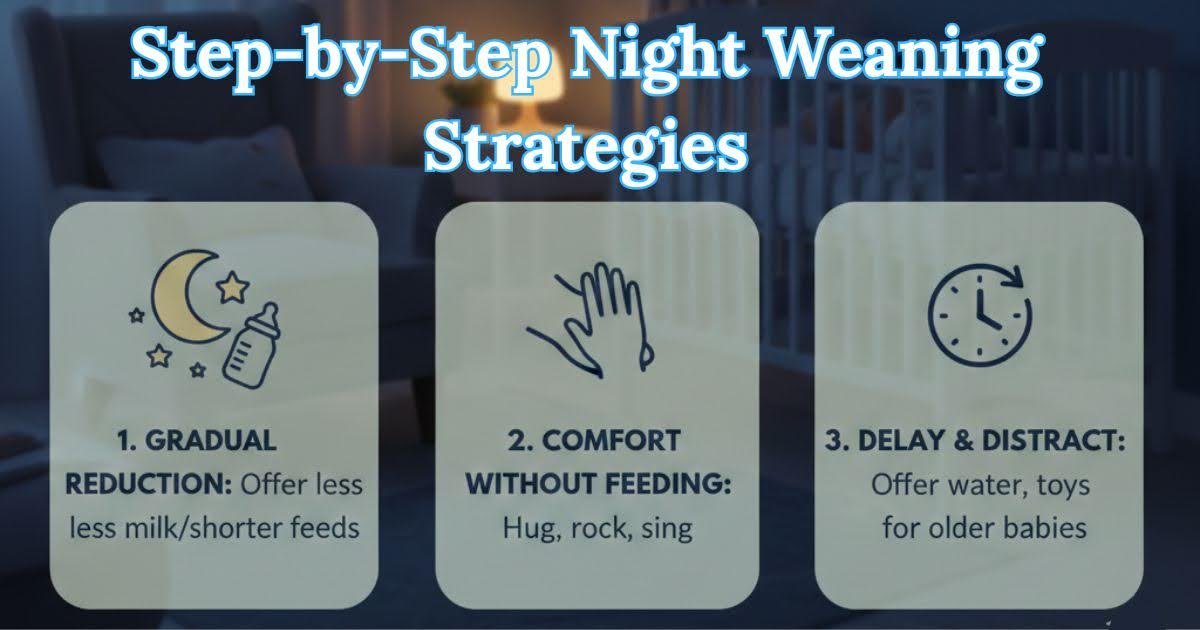
Now that you’re ready to start night weaning, let’s talk about how to actually do it. The key here is to take it one step at a time. Think of it like teaching your baby a new skill. It takes patience, practice, and a little creativity.
Gradual vs. Cold Turkey: What’s Best?
When it comes to night weaning, you have two main options: gradual or cold turkey. Gradual weaning is the gentler approach, where you slowly reduce the number of feedings over time. This can be easier on both you and your baby. Cold turkey, on the other hand, means stopping all night feedings at once. While it’s faster, it can be a bit more challenging, especially if your baby is used to feeding for comfort. Most parents find that gradual weaning works best.
Start by Reducing One Feeding
Begin by cutting back on just one nighttime feeding. For example, if your baby wakes up three times a night, try reducing the middle feeding first. You can shorten the feeding time or offer less milk. If you’re breastfeeding, try nursing for a few minutes less each night. If you’re bottle-feeding, reduce the amount of milk in the bottle. Once your baby adjusts, move on to the next feeding.
Introduce Soothing Alternatives
Babies often wake up at night because they’re used to the comfort of feeding. To help them adjust, introduce other soothing methods. Try rocking, singing, or offering a pacifier. If your baby is old enough, a favorite stuffed animal or blanket can also provide comfort. The goal is to help your baby learn that they can feel safe and calm without needing to eat.
Be Consistent
Consistency is your best friend during night weaning. Stick to your plan, even if it feels tough in the moment. Babies thrive on routine, and the more consistent you are, the faster they’ll adapt. If your baby wakes up and cries, offer comfort, but try not to give in and feed them unless it’s truly necessary.
Night weaning is a process, but with these steps, you’re well on your way to success. Next, we’ll tackle some common challenges and how to handle them like a pro. You’ve got this!
Addressing Common Challenges
Night weaning can feel like a rollercoaster at times. Just when you think you’ve got it figured out, a new challenge pops up. Don’t worry you’re not alone, and these bumps in the road are completely normal. Let’s tackle some of the most common hurdles together.
What If My Baby Cries When I Don’t Feed Them?
This is one of the biggest concerns for parents, and it’s completely understandable. Babies cry to communicate, and when you change their routine, they might feel confused or frustrated. The key is to stay calm and offer comfort in other ways. Try soothing them with gentle rocking, a soft lullaby, or even just your reassuring presence. Remember, you’re not ignoring their needs, you’re helping them adjust to a new way of sleeping.
How to Handle Sleep Regressions
Just when you think you’re making progress, a sleep regression can throw everything off track. These are temporary phases where your baby’s sleep patterns change, often due to growth spurts or developmental milestones. If this happens, don’t panic. Stick to your night weaning plan as much as possible, but be flexible if your baby needs a little extra comfort. Once the regression passes, you can get back on track.
Managing Emotional Guilt
Let’s be real, night weaning can stir up some serious mom or dad guilt. You might worry that you’re being too tough or that your baby feels abandoned. But here’s the truth: you’re doing this because you care about your baby’s well-being. Better sleep is a gift for both of you. Remind yourself that it’s okay to feel emotional, but don’t let guilt hold you back. You’re making a positive change.
Dealing with Setbacks
Setbacks are part of the process, and they don’t mean you’re failing. Maybe your baby has a rough night or wakes up more than usual. That’s okay. Take a deep breath, adjust as needed, and keep moving forward. Progress isn’t always a straight line, but every small step counts.
Night weaning comes with its challenges, but you’re stronger than you think. Up next, we’ll explore how to build healthy sleep habits that last long after night weaning is done. Let’s keep going!
Beyond Night Weaning: Building Healthy Sleep Habits
Night weaning is a big step, but it’s just the beginning of your baby’s sleep journey. Once you’ve tackled those nighttime feedings, it’s time to focus on creating healthy sleep habits that will stick with your little one as they grow. Let’s explore how to set the stage for peaceful nights and happy mornings.
Establish a Consistent Bedtime Routine
Babies thrive on routine, and a predictable bedtime routine can work wonders for their sleep. Start with calming activities like a warm bath, a gentle massage, or reading a favorite book. Keep the routine simple and consistent so your baby knows it’s time to wind down. Over time, these cues will help them feel relaxed and ready for sleep.
Encourage Independent Sleep
One of the best gifts you can give your baby is the ability to fall asleep on their own. This doesn’t mean leaving them to figure it out alone, it’s about teaching them to self-soothe. Place your baby in their crib when they’re drowsy but still awake. This helps them learn to drift off without relying on feeding, rocking, or other external comforts.
Focus on Daytime Nutrition
A well-fed baby during the day is more likely to sleep soundly at night. Make sure your little one is getting enough calories and nutrients during their waking hours. Offer balanced meals and snacks, and try to avoid big feedings right before bedtime. This helps shift their hunger cues to the daytime, making nighttime wake-ups less likely.
Create a Sleep-Friendly Environment
Your baby’s sleep space plays a big role in how well they rest. Keep the room dark, quiet, and at a comfortable temperature. A white noise machine can help block out background sounds, and a cozy sleep sack can keep your baby snug without the need for blankets. The goal is to create a space where your baby feels safe and secure.
Building healthy sleep habits takes time, but the payoff is worth it. With a little patience and consistency, you’ll set your baby up for a lifetime of good sleep. Ready to wrap things up? Let’s move on to the final section and celebrate your progress!
Conclusion
Stopping feeding to sleep is an important step toward helping your baby develop healthy, independent sleep habits. With patience, consistency, and gentle techniques, parents can reduce sleep associations with feeding while maintaining comfort and security. Gradual changes, a calming bedtime routine, and reassurance during night wakings allow babies to learn to self-soothe and enjoy longer, more restful sleep.
FAQs
Why should I stop feeding my baby to sleep?
Feeding to sleep can create sleep associations, leading to frequent night wakings and difficulty falling asleep independently.
When is the best time to stop feeding to sleep?
Most babies can start learning to self-soothe between 4–6 months, but timing depends on your baby’s development and readiness.
How do I stop feeding to sleep gently?
Gradually reduce feeding amounts, offer comfort through patting or rocking, and establish a consistent bedtime routine to encourage self-soothing.
What if my baby cries when I stop feeding to sleep?
Respond calmly with gentle reassurance, keep nighttime interactions brief, and be consistent to help your baby learn new sleep associations.
Can I combine sleep training with stopping feeding to sleep?
Yes, sleep training techniques like “pick up/put down” or “gradual withdrawal” can be combined with weaning from feeding to sleep for smoother transitions.