
Feeling hurt, confused, or rejected by your own mother can be deeply painful. When you keep asking yourself, “Why does my mother treat me this way?” it often means something inside the relationship feels broken or unfair. The truth is, a mother’s behavior is not always a reflection of your worth. This article explores the shocking truths behind such treatment and what you can do to heal.
The Psychology of a Difficult Mother
Ever wonder why your mom acts the way she does? It’s not always as simple as her just being “mean” or “difficult.” Often, there are deeper reasons rooted in her own life and experiences that have nothing to do with you. Let’s peel back the layers.
Emotional Immaturity: What It Is and How It Shows Up
Imagine an adult who, on the inside, still thinks and feels like a teenager. That’s a simple way to understand emotional immaturity. An emotionally immature mother might be great at her job or have many friends, but when it comes to feelings, she’s stuck. She may struggle to handle her own emotions, let alone yours.
This can show up in a few ways:
- It’s all about her: Conversations always circle back to her problems, her day, and her feelings. She might not show much interest in what’s happening in your life unless it directly involves her.
- She avoids deep talks: Trying to have a serious conversation about your feelings can feel like talking to a brick wall. She might change the subject, make a joke, or just shut down completely.
- She can be impulsive: Like a child who wants a cookie right now, she might act on her feelings without thinking about the consequences. This could mean saying hurtful things in the heat of the moment.
- She doesn’t handle stress well: When things get tough, she might become overly dramatic, play the victim, or blame everyone else for her problems.
Recognizing these signs isn’t about labeling your mom. It’s about understanding that her reactions might not reflect you, but rather a sign of her limited emotional tools.
The Influence of Societal and Cultural Expectations
From the moment a woman becomes a mother, society hands her a heavy instruction manual. She’s expected to be nurturing, selfless, all-knowing, and endlessly patient. It’s an impossible standard to live up to.
For some mothers, the pressure to be perfect is overwhelming. They might feel they are constantly failing, which can lead to resentment or anxiety. This pressure can cause them to act in ways that are confusing or hurtful. They might be overly critical because they see your life as a reflection of their own success as a parent. Or, they might try to control your choices to ensure you don’t make “mistakes” that could make them look bad. Understanding this pressure doesn’t excuse hurtful behavior, but it can provide some context for it.
Why Does My Mother Trigger Me?
Have you ever had a simple comment from your mother completely ruin your day? You’re going about your business, feeling fine, and then a single sentence sends you into a spiral of anger, sadness, or anxiety. These moments are called emotional triggers and are powerful clues to your inner world.
A trigger is like an emotional alarm bell. It goes off when something in the present moment triggers a painful experience from the past, even if you’re not consciously aware of it. For people who grew up with a difficult mother, these alarms can be very sensitive.
For example, if your mother often criticized your appearance as a child, a simple comment like, “Are you sure you want to wear that?” can feel like a deep personal attack. It’s not just about the words she’s saying now; it’s about the echo of all the times you felt judged or not good enough in the past. This is a common experience in a strained mother-daughter relationship.
Unresolved childhood trauma plays a huge role here. When we are young, we depend on our parents for safety and love. If those needs weren’t consistently met, we might carry around invisible wounds. Your mother’s behavior today can unintentionally reopen those old bruises, triggering a fresh wave of pain. Understanding your triggers is the first step toward disarming them.
Recognizing the Patterns
Complex mother-daughter dynamics often follow predictable patterns. Once you start to see them, you can stop feeling so caught off guard. You can learn to anticipate the moves in this complicated dance.
Common Behaviors of Emotionally Unavailable or Toxic Mothers
An emotionally unavailable mother is one who just can’t connect with you on a feeling level. A toxic mother goes a step further, actively causing emotional harm. Here are some patterns to look for:
- The Critic: Nothing you do is ever quite right. You get a promotion, and she asks why it wasn’t a bigger one. You’re excited about a new hobby, and she points out all the ways you could fail.
- The Victim: Everything is someone else’s fault. She constantly complains about how hard her life is and may use guilt to get you to do things for her.
- The Controller: She needs to be in charge of everything, including your life. She might offer unsolicited advice, try to make decisions for you, or become angry when you don’t do things her way.
- The Dismisser: Your feelings are not valid. If you’re sad, she tells you to “get over it.” If you’re angry, she calls you “dramatic.” She minimizes your experiences because she can’t handle them.
How These Patterns Affect You
Living with these patterns can have a lasting impact. You might develop a harsh inner critic that sounds just like your mother. You might struggle with self-doubt, constantly questioning your decisions and your worth.
These dynamics can also spill over into your other relationships. You might find yourself drawn to partners or friends who similarly treat you, or you might have a hard time trusting anyone at all. Recognizing that these struggles are a direct result of your upbringing is a decisive step toward healing. It’s not your fault.
The Emotional Toll of a Difficult Mother
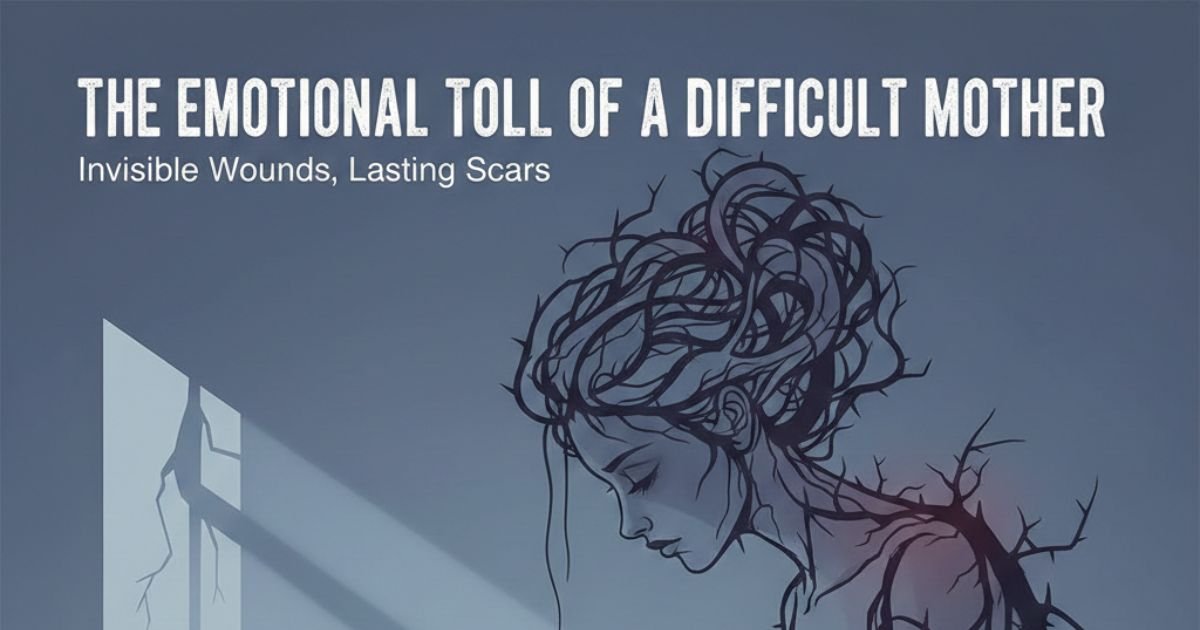
The constant stress of navigating a complex mother daughter relationship takes a real toll. It’s not just about the occasional argument; it’s a deep, continuous ache that can affect your entire sense of self.
Understanding the Concept of the “Mother Wound”
The “mother wound” is a term used to describe the pain passed down from mother to daughter. It’s the pain of not feeling seen, heard, or loved for who you truly are by the first person you ever loved. It’s the feeling of having an emotional hole that was supposed to be filled with a mother’s unconditional support.
This wound can manifest as a feeling of being “not good enough,” a constant need for external validation, or an inability to nurture yourself. It’s a profound sense of loss for the mothering you needed but never received.
How Guilt, Shame, and Self-Doubt Are Perpetuated
Guilt is a powerful tool in a complex dynamic. You might feel guilty for setting boundaries, for not being able to “fix” your mom, or even for feeling angry at her. This guilt can keep you stuck, always putting her needs before your own.
Shame is the feeling that there is something fundamentally wrong with you. When a mother is consistently critical or dismissive, a child can internalize that message. You might start to believe that you are unlovable or flawed, which can lead to a lifetime of self-doubt. These feelings are heavy burdens to carry, but they are not your truth.
Can I Fix My Relationship with My Mother?
This is the question that lies at the heart of the struggle. You love your mother, and a part of you will likely always hope that things can be different. It’s essential to approach this question with both hope and realism.
You cannot change another person. Your mother is responsible for her own actions, feelings, and growth. No matter how much you wish she would change, you cannot force her to see things differently or go to therapy. The only person you have control over is you.
Accepting this can be both heartbreaking and liberating. It’s sad to grieve the relationship you wish you had. But it’s liberating to realize that you can stop pouring all your energy into an impossible task.
Instead of focusing on “fixing” her, you can focus on changing the dynamic. You can change how you react, what you share, and how much access you give her to your emotional world. This is where your true power lies. Hope can shift from “I hope she changes” to “I hope I can find peace, no matter what she does.”
Filling the Emotional Void
If you can’t get the love and support you need from your mother, where do you get it? The answer is: from yourself. This might sound cliché, but learning to “re-parent” yourself is one of the most transformative things you can do.
It means giving yourself the things you never received. If your mother was critical, you learn to speak to yourself with kindness. If she was dismissive of your feelings, you learn to validate your own emotions.
Start by rebuilding your self-esteem. Make a list of your strengths, accomplishments, and the things you like about yourself. When your inner critic starts talking, challenge it with evidence of your worth. Find sources of support outside of your family. Connect with friends who lift you, join a support group, or talk to a therapist. You need people in your corner who see and celebrate the real you.
Setting Boundaries and Protecting Your Peace
Boundaries are not walls you build to punish someone; they are fences you make to protect your own well-being. They are essential for managing a challenging mother-daughter relationship.
Practical Steps for Creating Healthy Boundaries
- Identify your limits: What specific behaviors are not okay with you? Is it the critical comments? The unannounced visits? The guilt trips? Be clear on what you will no longer tolerate.
- Communicate clearly and calmly: State your boundary simply. For example, “I love talking to you, but I will not discuss my weight. If you bring it up, I will end the conversation.”
- Be prepared for pushback: Your mother will likely not like the new rules. She might get angry, cry, or try to make you feel guilty. This is normal. Stay firm.
- Follow through: This is the most crucial step. If you say you will end the conversation, you must do it. Every time you enforce a boundary, you teach others how to treat you.
Handling the guilt that comes with setting boundaries is tough. Remind yourself that you have a right to protect your peace. Your emotional health is just as important as anyone else’s.
Beyond the Mother Daughter Relationship
The work you do to heal from a complicated relationship with your mother has ripple effects throughout your entire life. It’s not just about her; it’s about you and your future.
When you heal the mother’s wound, you break a generational cycle. You ensure that you don’t pass the same pain on to your own children or perpetuate it in your other relationships. You learn what a healthy, respectful connection looks like and can start building it with others.
By learning to set boundaries, value your own feelings, and build your self-worth, you create a stronger foundation for every aspect of your life. The entire dynamic of your mother-daughter relationship can change, even if she doesn’t. You become the captain of your own ship, navigating the waters with confidence and peace.
FAQs
Why does my mother treat me badly even when I try my best?
Sometimes a mother’s behavior has more to do with her own emotional struggles than with you. She may be carrying unresolved trauma, stress, or disappointment from her past. Some parents unknowingly project their frustrations onto their children. Even if you do everything right, it may never feel “good enough” because the problem is internal to her, not caused by you.
Does my mother’s behavior mean she doesn’t love me?
Not necessarily. Many parents love their children but lack healthy ways to express it. Your mother might show love through control, criticism, or distance because that is how she learned relationships growing up. While her actions may hurt, it does not always mean she hates you—it may mean she doesn’t know how to love in a healthy way.
Could my mother be emotionally abusive without realizing it?
Yes. Emotional abuse can happen even without intention. Constant criticism, guilt-tripping, ignoring feelings, or comparing you to others are signs of emotional abuse. Some parents believe harshness builds strength, but in reality, it damages self-esteem. Recognizing this pattern is an important first step toward protecting your mental health.
Is it my fault that our relationship is difficult?
No. A healthy parent-child relationship is the responsibility of the parent first. Children are not meant to earn love through perfection. While communication and respect go both ways, you are not responsible for fixing your mother’s emotional wounds. You deserve kindness simply for existing.
What can I do if my mother’s behavior is affecting my mental health?
Start by setting emotional boundaries. Limit conversations that turn toxic, and give yourself space when needed. Seek support from trusted friends, relatives, or a therapist. Focus on self-care and building confidence. Healing begins when you accept that you cannot change your mother, but you can change how you protect yourself.
Conclusion
Being mistreated by a parent can leave deep emotional scars, but it does not define who you are. Your worth is not determined by how your mother treats you. Understanding the root causes behind her behavior can help you release guilt and self-blame. Healing takes time, patience, and self-compassion. You deserve love, respect, and emotional safety. Remember, choosing your peace is not selfish—it is necessary.