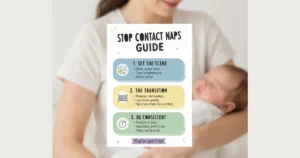
Is there anything sweeter than a sleeping baby curled up on your chest? Probably not. But let’s be real, is there anything more difficult than needing to sneeze, eat, or use the bathroom while that same baby is snoozing peacefully on you?
Welcome to the world of contact naps. It is one of the coziest parts of parenting, but it can also feel like a lovable trap.
If you are reading this, you are probably wondering when to stop contact naps so you can finally drink a hot coffee with two hands again. You are not alone! Navigating this baby sleep transition is a huge milestone for every family. While those snuggles are precious, helping your little one learn independent sleep skills is often the key to better rest for everyone.
What Are Contact Naps?
You might not find “contact nap” in a medical textbook, but any parent with a sleepy infant knows exactly what it is. It’s one of the sweetest (and sometimes most exhausting) parts of early parenthood.
Definition and Examples
Simply put, a contact nap is any sleep your baby gets while physically touching you. It’s not just about holding them in your arms, though that’s the classic version. It includes:
- Your baby sleeping in a carrier or wrap while you walk around.
- Your little one snoozing on your chest while you recline on the couch.
- Laying next to them in bed (safely) so they can feel your warmth.
If your baby is asleep and attached to you like a tiny, cute barnacle, that counts!
Why Babies Thrive on Contact Naps
It’s not just that they love you (although they do!). Newborns have spent nine months inside the womb, a place that is warm, tight, and constantly noisy with the sound of your heartbeat. The outside world is big, cold, and quiet.
Contact napping bridges that gap. Your body heat regulates their temperature, your breathing calms their nervous system, and your smell makes them feel safe. This sense of security often leads to longer, deeper sleep because they aren’t waking up panicked that they are alone. It’s their biological way of saying, “I’m safe here.”
Benefits and Drawbacks of Contact Naps
Like most things in parenting (and life!), contact napping is a bit of a mixed bag. It’s equal parts heartwarming and inconvenient. Before you decide to change things up, let’s look at why these naps are so powerful, and why they can be tough to sustain.
Emotional and Developmental Benefits
There is a reason your baby settles instantly the moment they hit your chest. Science backs up those snuggles! Contact naps are fantastic for emotional bonding. They release oxytocin (the “love hormone”) for both of you, strengthening your connection and reducing stress.
Developmentally, your body acts as a regulator. Your heartbeat and warmth help stabilize their heart rate and temperature. This often leads to longer stretches of sleep, which is crucial for their rapidly growing brains. It’s not “spoiling” them; it’s meeting a biological need for closeness that helps them feel secure enough to rest deeply.
Challenges of Contact Naps
While the snuggles are sweet, the reality is that life doesn’t stop just because the baby is sleeping. The biggest drawback? You are essentially “nap trapped.”
It’s hard to shower, eat lunch, or chase a toddler when you are a human mattress. Over time, heavy reliance on being held can also create a strong sleep association. This means your little one might start believing they cannot sleep without you, making it harder for anyone else (like a partner or sitter) to put them down for a nap later on.
When Should You Stop Contact Napping?
Deciding when to stop contact napping is less about a date on the calendar and more about what works for you and your baby. There’s no “right” time, but there are some common signals that a change might be on the horizon. The most important thing to remember is that you are the expert on your child. If contact naps are still working for your family, there is no need to rush.
Typical Age Ranges for Transitioning
While every baby is different, many parents start thinking about transitioning away from contact naps between 4 and 6 months of age. This is often because the 4 month sleep regression hits, and sleep patterns change. Babies’ sleep cycles mature, and they may start waking more frequently between cycles. For some, this is a great time to introduce independent sleep skills. However, some babies aren’t ready until they are a bit older, and that’s perfectly fine.
Signs Your Baby Is Ready for Independent Naps
Your baby will give you clues that they might be ready for their own space. Look out for these signs:
- They seem restless: Instead of snuggling in, they are fidgety or seem distracted while you hold them.
- Naps become shorter: The long, glorious contact naps are now consistently 20-30 minutes long.
- They sleep well at night: If your baby can put themselves to sleep at night in their crib, they have the skills to do it for naps, too.
- You’re just ready: If being nap trapped is causing more stress than joy, it is a valid reason to make a change.
How to Transition Away from Contact Naps
Alright, you’ve decided it’s time. But how do you actually make the move from your arms to the crib without turning naptime into a battle? The key is having a plan and being patient. Think of it as teaching a new skill, not flipping a switch.
Gradual vs. Abrupt Methods: Which Is Better?
There are two main approaches here. The “cold turkey” or abrupt method involves stopping contact naps entirely and only offering the crib. This can work, but it often involves more tears (from everyone).
The gradual method is usually gentler. It involves slowly getting your baby used to the idea of sleeping on their own. For most families, a slow and steady approach leads to less stress and more sustainable success. It gives your baby time to adjust to their new sleep environment without feeling abandoned.
Step by Step Guide to Introducing Independent Naps
Ready to give it a try? Start with just one nap a day, the first one is often the easiest.
- Create a simple pre nap routine: A quick diaper change, a song, and a cuddle can signal that sleep is coming.
- Put your baby down drowsy but awake: This is the golden rule of sleep training. It helps them learn to fall asleep without you.
- Offer comfort: If they fuss, try patting their back or shushing them for a few minutes before picking them up.
- Keep it short: If it’s not working after 15-20 minutes, it’s okay to “rescue” the nap with a contact nap and try again tomorrow. The goal is practice, not perfection.
What If My Baby Resists the Transition?
Let’s be honest: your baby probably thinks contact naps are the greatest invention since milk. So, when you try to change the rules, they might have some strong opinions about it. Resistance is totally normal, and it doesn’t mean you’re failing. It just means your little one is smart enough to know what they like!
Common Challenges During the Transition Phase
You might encounter the “crib lava” phenomenon, where your baby wakes up the second their back touches the mattress. Or perhaps you face the dreaded “short nap,” where they sleep for exactly 20 minutes before demanding a refund on their rest.
Sometimes, separation anxiety peaks right when you decide to transition. If your baby suddenly starts crying the moment you leave the room, it can feel impossible to step away. These hurdles are frustrating, but they are temporary bumps in the road, not permanent roadblocks.
How to Handle Setbacks and Maintain Consistency
If things go sideways, take a deep breath. Consistency is your best friend here, but flexibility is a close second. If a nap turns into a disaster, it’s okay to save the day with a contact nap to ensure your baby (and you) get some rest.
The key is to try again the next time. Don’t give up after one bad day. Keep your routine steady, offer plenty of comfort, and remember that learning a new skill takes time. You are teaching them that their crib is a safe, happy place, even if they need a little convincing at first.
How to Balance Contact Naps and Independent Sleep
Transitioning away from contact naps doesn’t have to be an all or nothing deal. In fact, finding a healthy balance can be the secret to a smooth and happy process for both you and your baby. It’s about building independent sleep skills, not erasing all the snuggles.
Mixing Contact Naps with Crib Naps
A great way to ease into this new phase is by mixing things up. You don’t have to give up your favorite cuddly nap of the day. A common strategy is to aim for the first nap of the day in the crib, since babies are often most ready for sleep then.
Let the other naps be contact naps if needed. This hybrid approach gives your baby consistent practice with independent sleep while still offering the comfort and connection they crave. As they get better at napping in their crib, you can gradually add more independent naps into the rotation.
When It’s Okay to Continue Contact Naps
Let’s make one thing clear: you can absolutely keep contact napping if it works for you. There’s no rule that says you must stop. It’s a wonderful choice for sick days, during teething, or on days when your baby is extra fussy and just needs more comfort. And sometimes, you just need those cuddles, too.
If you enjoy the quiet moments and can manage your day around them, feel free to continue. The goal is a well rested baby and a happy parent, not a strict sleep regimen.
FAQs
Is It Bad If My Baby Only Contact Naps?
Short answer: No, absolutely not! It is not “bad” if your newborn only wants to sleep on you. In fact, it is completely normal biology. Your baby spent nine months inside you, so being close feels safe and right to them.
If contact napping is working for your family right now and everyone is happy, there is no need to stress. It doesn’t mean you are doing anything wrong. It just means your baby loves being near their favorite person, you.
Can Contact Napping Cause Bad Sleep Habits?
This is the big fear, right? That holding your baby now means they’ll need to be held until college? Don’t panic. Contact naps do not inherently cause “bad” habits, especially in the newborn stage (0–3 months). You cannot spoil a newborn with too much comfort.
However, as babies get older (around 4–6 months), they do start to form stronger sleep associations. If they only ever sleep on you, they might struggle to learn independent sleep skills later because they don’t know any other way to fall asleep. It’s not a “bad habit” so much as a preference they’ve learned. The good news is that new skills can always be learned when you are ready to teach them.
Expert Tips for Better Baby Sleep
You don’t have to work magic to get your baby to sleep in a crib, sometimes you just need the right tools in your toolkit. Setting the scene properly can make the difference between a frustrating 10 minute catnap and a solid hour of rest for everyone.
Using White Noise, Swaddles, and Sleep Sacks Effectively
Think of these items as your baby’s “sleep cues.” They signal to their brain that it is time to rest. White noise is a total game changer; it mimics the loud whooshing sounds of the womb and covers up sudden household noises (like the doorbell or a barking dog). Keep it continuous and low volume for the best results.
For younger babies, a swaddle recreates the tight, cozy feeling of being held, which prevents their startle reflex from waking them up. Once they show signs of rolling, switch to a sleep sack. It’s basically a wearable blanket that keeps them warm and safe without the risk of loose bedding.
The Role of a Consistent Nap Routine in Improving Sleep Quality
Here is a little secret: babies actually love being bored. They crave predictability because the world is so new and overwhelming to them. A consistent nap routine doesn’t have to be long or complicated, just 5 to 10 minutes is enough.
Try a simple sequence like diaper change, sleep sack on, white noise on, and a quick song or cuddle. Doing these same steps in the same order every time acts like a “sleep switch” for your baby’s brain. It tells them exactly what is coming next, helping them relax and settle down before they even hit the mattress.
Final Thoughts
Embracing the Journey of Parenthood
It’s easy to get caught up in the “shoulds” and “supposed tos” of raising a baby. But the truth is, contact naps aren’t a failure, they are a testament to the incredible bond you share with your little one. Whether you are ready to reclaim your arms today or want to soak in the snuggles for another month, trust your instincts. You are doing a great job, even on the days when the only thing you accomplish is being a human pillow.