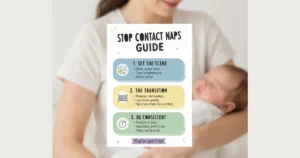
Are contact naps bad? Not really! Many parents wonder if holding their baby to nap will spoil them, but contact naps can actually boost comfort and bonding. The main downside is that too many may make independent naps harder later. By understanding the pros and cons, you can make contact naps work safely and happily for both you and your baby.
The Science Behind Contact Naps
Contact naps aren’t just cozy moments; they’re backed by science! Let’s dive into why these snuggly naps are so beneficial for your little one.
How Contact Naps Support Baby’s Development
When your baby naps on your chest, they’re not just sleeping, they’re thriving. Physical contact helps regulate their breathing, heart rate, and even body temperature. It’s like their tiny system syncs up with yours, creating a sense of calm and security. Plus, those cuddles release oxytocin (the “love hormone”) in both of you, strengthening your bond.
The Role of Physical Contact in Emotional and Cognitive Growth
Babies are born craving connection. During contact naps, they feel your warmth, hear your heartbeat, and smell your familiar scent, all of which help them feel safe. This emotional security lies at the foundation of healthy brain development. In fact, studies show that touch stimulates neural pathways, helping your baby’s brain grow and learn.
What Does Research Say About Contact Naps?
Research highlights the benefits of close contact, especially in the early months. Practices like kangaroo care (skin-to-skin contact) have been shown to reduce stress, improve sleep quality, and even boost breastfeeding success. While contact naps aren’t exactly the same, they share many of these perks. Experts agree: holding your baby close during naps is a natural and healthy way to support their development.
So, the next time you’re “nap trapped,” remember you’re not just holding your baby; you’re helping them grow, thrive, and feel loved. And honestly, isn’t that the best excuse to stay on the couch a little longer?
Benefits of Contact Naps
Contact naps aren’t just about catching some Z’s; they’re packed with perks for both you and your baby. Let’s explore why these snuggly moments are so special.
For Babies: Emotional Security, Better Sleep, and Brain Development
When your baby naps in your arms, they feel safe and secure. That sense of closeness reminds them of the womb, where everything was warm and cozy. This emotional comfort helps them relax, leading to longer and deeper naps. Plus, the physical contact supports brain development by stimulating their senses, touch, smell, and sound, all of which play a role in building those neural connections.
For Parents: Bonding, Stress Reduction, and Oxytocin Release
Let’s be honest, there’s nothing quite like holding your baby while they snooze. It’s a bonding experience that melts your heart and strengthens your connection. But it’s not just about the feels. Contact naps also release oxytocin, the “love hormone,” which can lower your stress levels and boost your mood. It’s like a mini therapy session, but with baby cuddles.
How Contact Naps Mimic the Womb Environment
Babies love contact naps because they mimic the soothing environment of the womb. The gentle rise and fall of your chest, the rhythm of your heartbeat, and your familiar scent all create a sense of calm. It’s like their happy place, and it helps them feel safe as they adjust to the big, wide world.
So, the next time you’re holding your little one during a nap, know that you’re doing something amazing. You’re not just helping them sleep, you’re giving them love, security, and a strong foundation for growth. And honestly, isn’t that worth every second?
Drawbacks and Challenges
While contact naps are magical in many ways, they’re not without their challenges. Let’s take a closer look at some of the potential downsides and how to handle them.
Are Contact Naps Creating Dependency?
One common worry among parents is, “Will my baby get too used to contact naps?” The truth is, babies thrive on routines and comfort, so it’s natural for them to prefer being held. However, this doesn’t mean they’ll never learn to nap independently. With time and gentle transitions, most babies adapt just fine. So, don’t stress, enjoy the cuddles while they last!
Physical and Emotional Strain on Parents
Let’s be real, holding a baby for every nap can be exhausting. Your arms might ache, your to-do list might grow, and you might feel “nap trapped.” It’s okay to feel overwhelmed sometimes. Remember, it’s not selfish to take a break or ask for help. Using tools like baby carriers or taking turns with a partner can make things easier.
Safety Concerns: How to Avoid Risks During Contact Naps
Safety is key when it comes to contact naps. Always stay awake and alert while holding your baby, and avoid soft surfaces like couches or armchairs where they could slip into an unsafe position. If you’re feeling drowsy, it’s better to place your baby in a crib or bassinet. A little extra caution goes a long way in keeping your little one safe.
While contact naps come with their challenges, they’re also a beautiful part of early parenthood. With a bit of balance and planning, you can enjoy these moments without feeling overwhelmed. After all, those snuggles won’t last forever!
Expert Tips for Safe and Effective Contact Napping
Contact naps can be a lifesaver for both you and your baby, but doing them safely and effectively is key. Here are some expert-backed tips to make the most of these precious moments.
How to Ensure Safety During Contact Naps
Safety first! Always stay awake and alert while holding your baby during a contact nap. Avoid soft surfaces like couches or armchairs where your baby could slip into an unsafe position. Instead, sit in a firm, supportive chair. If you’re feeling sleepy, it’s better to place your baby in a crib or bassinet to keep them safe.
Using Tools Like Babywearing and Sleep Sacks
Babywearing can be a game-changer for contact naps. A good baby carrier keeps your little one close while freeing up your hands to move around. It’s perfect for multitasking or just enjoying a cup of coffee! Sleep sacks are another great tool they mimic the snug feeling of being held, helping your baby feel secure even when they’re not in your arms.
Balancing Contact Naps with Independent Sleep
While contact naps are wonderful, it’s also important to encourage independent sleep over time. Start small by placing your baby in their crib for one nap a day. Use white noise or a gentle rocking motion to help them settle. Remember, it’s a gradual process. Patience is your best friend here.
With these tips, you can enjoy the best of both worlds: safe, snuggly contact naps and the confidence to help your baby transition to independent sleep when the time is right. And hey, don’t forget to soak up those cuddles, they’re pure magic!
Transitioning Away from Contact Naps
As much as you love those snuggly contact naps, there comes a time when your baby might be ready to nap on their own. Here’s how to make the transition smooth and stress-free.
When Should You Start Transitioning?
There’s no one-size-fits-all answer, but look for signs your baby is ready. Are they starting to squirm or resist being held during naps? Are they showing interest in their crib or bassinet? These are clues that it might be time to introduce independent naps. Most babies are ready to start transitioning around 4–6 months, but every baby is different. Trust your instincts.
How to Gently Move from Contact Naps to Crib Naps
Start small. Choose one nap a day, usually the first nap, when your baby is most rested, and place them in their crib while they’re drowsy but awake. Use soothing techniques like white noise, a gentle pat on their back, or a favorite sleep sack to help them settle. Gradually increase the number of crib naps as they get more comfortable.
Tips for Creating a Sleep Routine That Works
Consistency is key. Create a simple pre-nap routine, like dimming the lights, playing soft music, or reading a short book. These cues signal to your baby that it’s time to sleep. Keep the environment calm and cozy, think of it as setting the stage for a great nap.
Transitioning away from contact naps doesn’t have to be overwhelming. Take it one step at a time, and remember: it’s okay to mix in a few contact naps if that’s what works for you and your baby. After all, every family’s journey is unique!
FAQs
Can Contact Naps Spoil a Baby?
Short answer: No, you can’t spoil a baby with love and cuddles! Babies thrive on connection and comfort, especially in the early months. Contact naps help them feel safe and secure, which is essential for their emotional and physical development. As they grow, they’ll naturally become more independent, so enjoy those snuggles guilt-free.
What’s the Difference Between Contact Naps and Co-Sleeping?
Great question! Contact naps happen when your baby naps on you while you’re awake and alert. Co-sleeping, on the other hand, involves sharing a sleeping space, like a bed, with your baby often at night. While contact naps are generally safe with proper precautions, co-sleeping can carry risks if not done safely. Always follow safe sleep guidelines to keep your little one protected.
How Do I Balance Contact Naps with My Daily Routine?
It’s all about finding what works for you. If you’re feeling “nap trapped,” try babywearing to keep your hands free while your baby naps. Or, use contact naps as a chance to rest, read, or watch your favorite show. Remember, it’s okay to ask for help or mix in crib naps to give yourself a break.
These FAQs cover some of the biggest worries parents have about contact naps. If you’re still unsure, trust your instincts and do what feels right for you and your baby. After all, every family’s journey is unique, and you’re doing an amazing job!
Conclusion
Contact naps are more than just a way to help your baby sleep; they’re a beautiful opportunity to bond, provide comfort, and support your little one’s development. While they come with their challenges, like balancing your own needs and ensuring safety, the benefits far outweigh the drawbacks. These snuggly moments create a foundation of love and security that your baby will carry with them as they grow.
Remember, there’s no “right” way to approach contact naps. Whether you embrace them fully, mix them with crib naps, or transition away when the time feels right, the key is to find what works best for your family. Trust your instincts, take it one step at a time, and don’t forget to soak up those cuddles, they’re fleeting but oh-so-special.
At the end of the day, you’re not just helping your baby sleep; you’re creating memories, building trust, and giving them the best start in life. And honestly, isn’t that what parenting is all about? Keep going, you’ve got this!